Inflammation is at the root of a surprising number of conditions — from post-workout soreness and chronic joint discomfort to skin flare-ups and digestive issues. As more New Yorkers integrate cannabis into their wellness routines, one of the most common questions dispensary teams field is: "What actually works for inflammation?" The honest answer is nuanced. Research into cannabis for pain relief and inflammation is ongoing, but the scientific literature has identified several key compounds and mechanisms worth understanding. This post breaks down what the research currently shows, what compounds and product formats are most relevant, and how to approach selecting the right product for your specific needs.
TL;DR
Curious about cannabis for pain relief and inflammation? Here's what the research currently shows, which compounds and formats matter most, and how to approach selecting the right product. This is not medical advice — for any health concern, consult a licensed physician.
Several of cannabis's compounds interact with the endocannabinoid system (ECS), which plays a documented role in regulating immune response and pain signalling. CB2 receptors in particular are found in high concentrations in immune cells and peripheral tissues — precisely the areas involved in inflammatory response — which is why both the THC:CBD ratio and the product format matter when selecting for inflammation.
What is inflammation and why it matters
Inflammation is the body's immune response to damage or threat. Acute inflammation — the redness and swelling around a wound — is protective and temporary. Chronic inflammation is different. It is a persistent, low-level activation of the immune system that researchers now link to conditions ranging from arthritis to cardiovascular disease.
Managing chronic inflammation often involves lifestyle changes, physical therapy, and medication. Cannabis has entered that conversation because several of its compounds interact with the endocannabinoid system (ECS), which plays a documented role in regulating immune response and pain signalling.
The endocannabinoid system: why cannabis interacts with inflammation
The ECS is a cell-signalling network present throughout the body. It includes receptors (CB1 and CB2), endocannabinoids the body produces naturally, and enzymes that break them down. CB2 receptors are found in high concentrations in immune cells and peripheral tissues — precisely the areas involved in inflammatory response.
According to a 2018 review published in Frontiers in Pharmacology, both THC and CBD interact with CB2 receptors and have demonstrated anti-inflammatory properties in preclinical models (Nichols & Kaplan, 2020). THC binds directly to CB1 and CB2 receptors, while CBD modulates ECS activity more indirectly, influencing receptor sensitivity and enzyme activity rather than binding directly.
This means the two main cannabinoids in cannabis operate through different pathways — which is why both the ratio of THC to CBD and the product format matter when selecting for inflammation.
What the research currently shows
The evidence base for cannabis in inflammation management is growing but still largely preclinical or observational. Here is where it stands.
CBD and anti-inflammatory effects
Multiple preclinical studies have found CBD reduces markers of inflammation in animal models. A 2019 study in the European Journal of Pain found that topical CBD application reduced inflammation and pain in a rat arthritis model without apparent side effects (Hammell et al., 2016). Human clinical trials are more limited, but early data is promising for conditions including inflammatory bowel disease and neuropathic pain.
THC and pain modulation
THC's interaction with CB1 receptors in the central nervous system means it can modulate pain perception directly. A 2015 meta-analysis in JAMA Internal Medicine found moderate evidence that cannabis products containing THC improved chronic pain outcomes across multiple studies (Whiting et al., 2015). For inflammation-linked pain specifically, the combination of THC and CBD — the so-called "entourage effect" — appears more effective than either compound in isolation in several study designs.
Terpenes and inflammation
Terpenes are aromatic compounds found throughout the cannabis plant that also interact with the ECS and broader biological systems. Beta-caryophyllene, found in strains like OG Kush and GSC, binds directly to CB2 receptors and has demonstrated anti-inflammatory activity in preclinical models (Russo, 2011). Myrcene and limonene also show anti-inflammatory properties in early research. Selecting a product based on its terpene profile — not just THC percentage — is increasingly considered best practice by cannabis researchers.
What to look for when shopping for cannabis for inflammation
Given the research landscape, here is a practical framework for selecting products.
Consider a balanced THC:CBD ratio
If your primary goal is anti-inflammatory support with manageable psychoactivity, a balanced 1:1 THC:CBD ratio product is a reasonable starting point. The CBD helps modulate the effects of THC, which can make the experience more comfortable for those sensitive to intoxication. Products with higher CBD content and lower THC are also available for those who prefer minimal psychoactive effect.
Look for terpene-rich, full-spectrum products
Full-spectrum products preserve the plant's natural range of cannabinoids and terpenes, supporting the entourage effect. When reviewing a product's certificate of analysis (COA), look for the presence of beta-caryophyllene, myrcene, or limonene. Broad-spectrum and isolate products strip terpenes and minor cannabinoids, which current research suggests diminishes the anti-inflammatory potential.
Consider the format
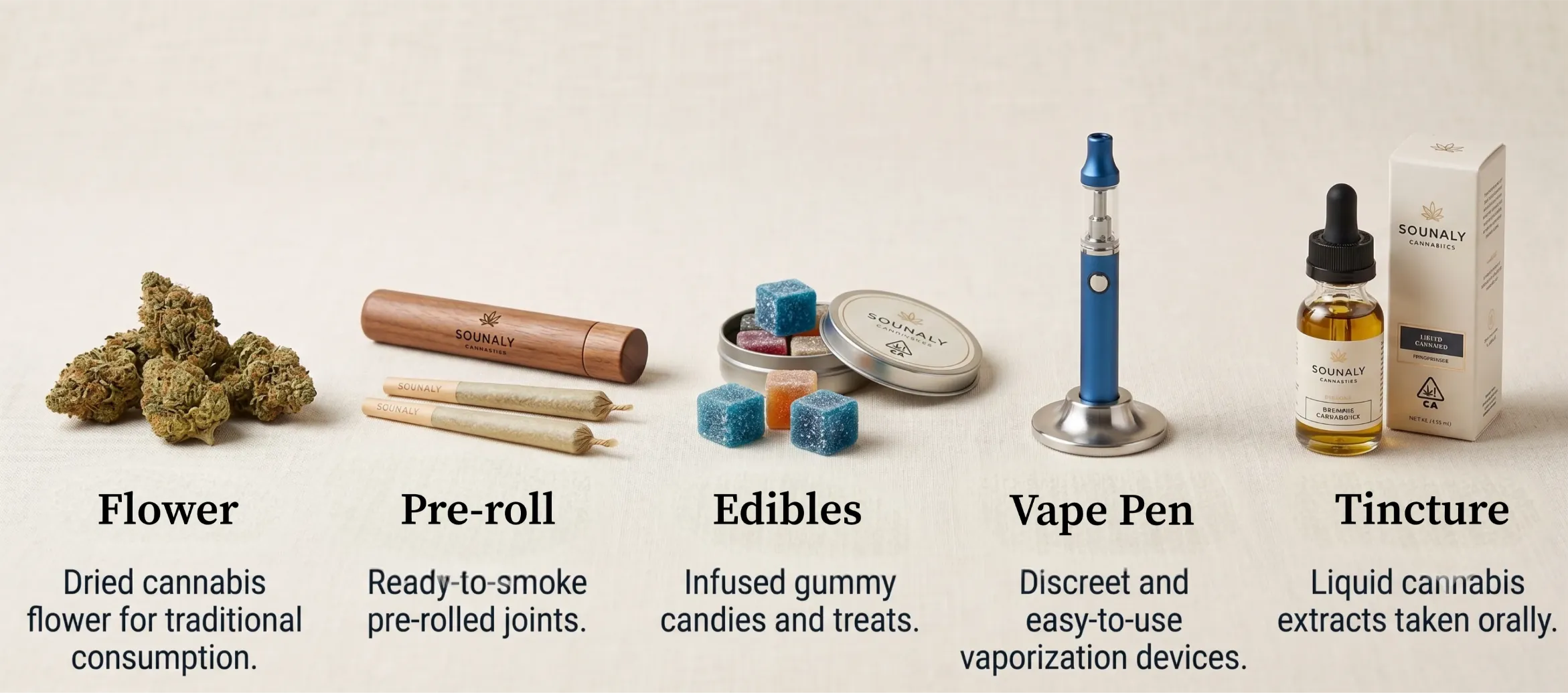
Topicals deliver localised relief directly to joints and muscles without systemic effects — useful for targeted inflammation. Sublingual tinctures offer faster onset (15–45 minutes) than edibles (1–2 hours) and allow precise dosing. Flower and vaporiser products provide the fastest onset but shorter duration. The right format depends on whether your inflammation is localised or systemic, and how long you need effects to last.
Strains worth knowing
Several strains are frequently cited in cannabis wellness contexts for their terpene profiles and reported anti-inflammatory properties. ACDC and Harlequin are high-CBD strains with minimal THC, making them accessible for sensitive users. Blue Dream and OG Kush are widely available in New York dispensaries and contain notable levels of myrcene and caryophyllene. As with all cannabis use, individual response varies, and starting with a low dose is always advisable.
The bottom line
The science is pointing in a consistent direction: cannabis contains several compounds — CBD, THC, and specific terpenes — that interact with inflammation pathways in the body. The most useful products for this goal are typically full-spectrum, terpene-rich, and selected based on both cannabinoid ratio and format rather than THC percentage alone.
The research is still catching up to widespread consumer interest, but enough is established to shop with more precision than "whatever is strongest." Understanding what to look for puts you in a better position to find what actually works.
Please note
This is not medical advice. For any health concern, consult a licensed physician. Cannabis affects individuals differently. Must be 21+ to purchase in New York State.
FAQs
Most of the strongest evidence comes from preclinical (animal and cell-based) studies. Human clinical trials specifically on cannabis for inflammation are limited but growing. Several systematic reviews, including a 2021 review in Cannabis and Cannabinoid Research, note promising findings for inflammation-adjacent conditions like neuropathic pain and inflammatory bowel disease. The research is encouraging but not yet conclusive at the clinical level.
Research suggests the two work better together than in isolation, due to the entourage effect. However, if you need to avoid intoxication — for work or other reasons — CBD-dominant products with minor THC are a practical option that still offers anti-inflammatory activity. THC-dominant products may be more effective for pain modulation specifically.
Yes. Topical cannabis products — creams, balms, and patches — are absorbed transdermally and do not enter the bloodstream in amounts significant enough to produce psychoactive effects. They are suitable for localised inflammation in muscles and joints.
Beta-caryophyllene is the most studied terpene for anti-inflammatory properties, as it is the only terpene known to directly bind to CB2 receptors. Myrcene and limonene also show anti-inflammatory activity in early research. Ask your dispensary team for products with these terpenes listed on the COA.
Look for "full-spectrum" on the label and review the certificate of analysis (COA), which should list not only THC and CBD but also minor cannabinoids (CBG, CBN, CBC) and terpenes. Reputable dispensaries make COAs available on request or via QR code on the packaging.
Visit JD's Jungle
Our team at JD's Jungle is trained to walk you through full-spectrum options, balanced-ratio products, and terpene-forward strains available right now in New York. Come in with your questions — we know the inventory and we know the science. Stop by and let us help you find the right product for your specific needs.
Find a locationReferences
- Hammell, D. C., et al. (2016). Transdermal cannabidiol reduces inflammation and pain in a rat model of arthritis. European Journal of Pain. https://doi.org/10.1002/ejp.818
- Nichols, J. M., & Kaplan, B. L. F. (2020). Immune responses regulated by cannabidiol. Cannabis and Cannabinoid Research. https://doi.org/10.1089/can.2018.0073
- Russo, E. B. (2011). Taming THC: Phytocannabinoid-terpenoid entourage effects. British Journal of Pharmacology. https://doi.org/10.1111/j.1476-5381.2011.01238.x
- Whiting, P. F., et al. (2015). Cannabinoids for medical use: A systematic review and meta-analysis. JAMA. https://doi.org/10.1001/jama.2015.6358